Their teeth are often crowded together in a small mouth, creating niches where plaque and tartar can accumulate with ease. This predisposition to periodontal disease begins in puppyhood. Furthermore, their tiny jaws lack the crushing power of a larger dog’s, making the size, shape, and texture of their kibble a critical factor. Kibble that is too large can discourage chewing, leading to gulping and potential choking, while also failing to provide any mechanical cleaning action on the teeth. Puppy Small Breed
Understanding these four pillars—high metabolism, rapid growth, sensitive digestion, and dental vulnerability—is the first step in appreciating why a one-size-fits-all approach to puppy nutrition is fundamentally inadequate. It is the very reason why products like Pedigree PRO, which are “specially developed for growing small breed puppies,” are not just a marketing niche but a physiological necessity. Puppy Small Breed
Part 2: Deconstructing the Specially Designed Kibble: A Masterclass in Nutritional Engineering
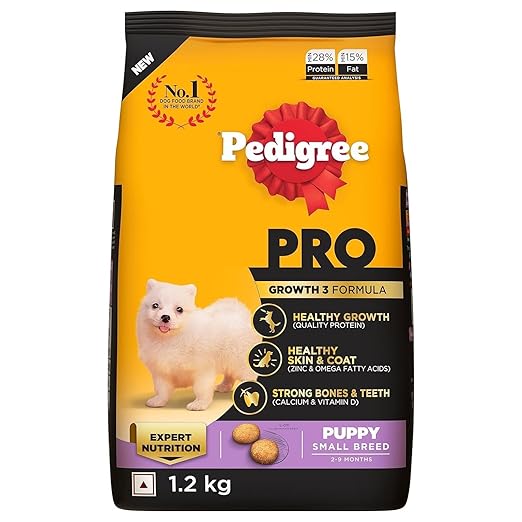
The product description begins with a powerful claim: “SPECIALLY DESIGNED KIBBLES – Mini-sized kibbles tailored for small breed puppies, making chewing easier and digestion smoother.” Let’s dissect the profound science and practical benefits embedded in this single statement. Puppy Small Breed
2.1. The Mini-Sized Kibble Advantage: More Than Just a Matter of Size
The creation of mini-sized kibble is a direct response to the anatomical realities of a puppy small breed.
-
Promoting Proper Chewing: A kibble that is appropriately sized for a tiny mouth encourages the puppy to chew thoroughly. This act of chewing is multifaceted. It mechanically breaks down the food, initiating the digestive process in the mouth with the mixing of saliva. For a small breed puppy, this is the first critical step towards smoother digestion. It also slows down the eating process, reducing the risk of gulping air, which can lead to gastrointestinal discomfort and a condition known as bloat, which, while less common in small breeds, is still a risk. Puppy Small Breed
-
Dental Health Benefits: The physical act of chewing on a correctly sized, optimally textured kibble can help massage the gums and provide a mild abrasive action against the teeth. This helps to scrape away soft plaque before it can mineralize into hard, destructive tartar. While not a substitute for regular brushing, a proper kibble size is a foundational component of a lifelong dental care regimen for your small breed dog. Puppy Small Breed
-
Psychological Satisfaction: Chewing is a natural, instinctive behavior for all canines. Providing a kibble that satisfies this instinct in a safe, appropriate manner can contribute to a puppy’s overall mental well-being and reduce destructive chewing behaviors on household items. Puppy Small Breed
2.2. The Digestibility Equation: Formulating for “Smoother Digestion”
The claim of “smoother digestion” is where ingredient quality and kibble engineering intersect. For a puppy small breed with a sensitive gut, digestibility is paramount. It refers to the proportion of food that is absorbed from the gastrointestinal tract into the body. Puppy Small Breed
-
High-Quality, Concentrated Ingredients: The foundation of high digestibility is the use of superior, highly bioavailable ingredients. We will explore this in-depth in the next section, but in essence, it means using protein sources like chicken meal or lamb meal, which are concentrated and easily utilized by the puppy’s body, rather than lower-quality by-products or plant-based proteins that are harder to digest. Puppy Small Breed
-
Precise Cooking Processes: The extrusion process used to create kibble is carefully controlled to gelatinize starches, which makes them more digestible for the puppy. Over- or under-cooking can compromise this, leading to nutrients passing through the system unabsorbed. Puppy Small Breed
-
The Role of Fibre: A careful balance of soluble and insoluble fibres is crucial. Ingredients like beet pulp, for example, are a source of fermentable fibre that promotes the health of beneficial gut bacteria, which in turn aids in digestion and nutrient absorption, ensuring your puppy small breed gets the most out of every bite. Puppy Small Breed
This specially designed kibble is, therefore, the delivery system for the vital nutrients within, engineered to ensure that those nutrients are not only present but are also accessible to the tiny, growing body of your small breed puppy. Puppy Small Breed
Part 3: The Cornerstone of Canine Vitality: A Deep Dive into “Superior Ingredients”
The proclamation of “SUPERIOR INGREDIENTS – Formulated with high-quality proteins and essential nutrients to support early growth and high energy needs” is the heart of any premium puppy food. But what does “superior” truly mean in the context of a puppy small breed?
3.1. The Power of High-Quality Proteins: Building Blocks for Life
Proteins, composed of amino acids, are the fundamental building blocks for virtually every tissue in the body. For a puppy small breed undergoing rapid growth, the demand for specific, high-quality proteins is immense. Puppy Small Breed
-
Muscle Development: Every pounce, every wag, every burst of active play is powered by developing muscles that require a constant supply of complete proteins. Puppy Small Breed
-
Organ Formation: The heart, liver, kidneys, and other vital organs are being constructed at a breathtaking pace. The quality of the protein directly influences the integrity and lifelong function of these organs. Puppy Small Breed
-
Immune System Support: Antibodies, the soldiers of the immune system, are themselves proteins. A diet rich in high-quality protein is essential for building a robust immune system capable of fending off the pathogens a curious puppy small breed will inevitably encounter. Puppy Small Breed
“Superior” protein sources are those that provide a complete amino acid profile and are highly digestible. Look for named animal proteins as the first ingredient, such as “chicken,” “lamb,” or “salmon.” Meals, such as “chicken meal,” are concentrated forms of protein ( moisture removed) and are excellent, dense sources of these essential building blocks. For a small breed puppy with limited stomach capacity, this density and quality are non-negotiable. Puppy Small Breed
3.2. Fats: The Concentrated Energy Source and Beyond
Fats are the most concentrated source of energy, providing more than twice the energy per gram as proteins or carbohydrates. This makes them the primary fuel for the high-octane metabolism of a puppy small breed. But their role extends far beyond mere calories. Puppy Small Breed
-
Omega Fatty Acids: The inclusion of Omega-3 (like DHA and EPA) and Omega-6 fatty acids is critical. DHA, in particular, is a major structural component of the brain and retina, supporting cognitive development and visual acuity. A diet rich in DHA can help your quick-learning puppy small breed become a more trainable and perceptive adult dog. Furthermore, these fatty acids are paramount for skin and coat health, which we will explore later. Puppy Small Breed
-
Fat-Soluble Vitamins: Fats are essential for the absorption of fat-soluble vitamins (A, D, E, and K), each playing a vital role in vision, bone development, antioxidant protection, and blood clotting. Puppy Small Breed
3.3. Carbohydrates: The Intelligent Energy Support
While not essential in the same way as proteins and fats, carbohydrates from highly digestible sources like whole grains (e.g., brown rice, oats) or vegetables provide a readily available source of glucose, the primary energy currency for cells. This supports the sustained energy needs for active play and growth. The key is the quality and digestibility of the carbohydrate source, ensuring it contributes to energy without causing spikes in blood sugar or digestive upset in your sensitive small breed puppy. Puppy Small Breed
The synergy of these superior ingredients—high-quality protein for building, optimal fats for energy and brain function, and digestible carbohydrates for fuel—creates a nutritional matrix perfectly aligned with the intense demands of a growing puppy small breed. Puppy Small Breed
Part 4: The “Expert Nutrition” Paradigm: Trust, Science, and the 33% More Nutrients Claim
The phrase “EXPERT NUTRITION – Trusted by veterinarians Pedigree PRO contains 33% more nutrients *(Compared to Pedigree Puppy Chicken & Milk Dry Food), ensuring strong development and immune support” invites both trust and scrutiny. Let’s unpack what this means for your puppy small breed.
4.1. The Veterinary Trust Factor
The statement “trusted by veterinarians” signifies that the formulation is grounded in veterinary science. While individual veterinarians may have different brand preferences, a claim like this generally indicates that the company has engaged with veterinary nutritionists to ensure their recipes meet or exceed the nutritional standards established by bodies like the Association of American Feed Control Officials (AAFCO) for growth and reproduction. This provides a layer of confidence that the food is complete and balanced for the specific life stage of your puppy small breed.
4.2. Understanding the “33% More Nutrients” Claim
This is a comparative claim, and it’s crucial to understand the context. It is not stating that the food is 33% more nutritious than all other foods, but that it has a higher nutrient density compared to another product within the same brand’s portfolio. This is a significant distinction for a small breed puppy.
-
Nutrient Density is Key: As established, a puppy small breed has a tiny stomach but massive nutritional demands. They cannot eat a large volume of food to meet their needs. Therefore, every mouthful must be packed with vitamins, minerals, and essential nutrients. A 33% increase in nutrient density means that with a smaller serving size, your puppy is receiving a more potent dose of the building blocks they need for strong development. This includes higher levels of vitamins like A, D, and E, and minerals like calcium, phosphorus, and zinc.
-
Direct Impact on Immune Support: A significant portion of these “more nutrients” would be directed towards compounds that bolster the immune system. Antioxidants like Vitamin E and Vitamin C help neutralize free radicals, while trace minerals like selenium and zinc are co-factors for enzymatic processes vital for immune cell function. For a vulnerable puppy small breed, whose immune system is still maturing, this enhanced nutritional support can be the difference between a minor sniffle and a serious illness.
This “expert nutrition” approach moves beyond simply meeting minimum requirements; it aims to optimize health through strategic nutrient fortification, a philosophy that is perfectly suited to the high-stakes growth period of a small breed puppy.
Part 5: The “Growth 3 Formula” in Action: A Triad of Targeted Support
The “GROWTH 3 FORMULA” breaks down the holistic support system into three digestible pillars, each addressing a critical area of development for your puppy small breed.
5.1. Pillar One: Quality Proteins for Foundational Growth
This first pillar reiterates the absolute necessity of high-quality protein, which we have already established as the non-negotiable foundation for muscle, organ, and tissue development in a small breed puppy. It is the engine of growth.
5.2. Pillar Two: Calcium & Vitamin D for The Skeletal Framework
The second pillar, “Calcium & Vitamin D support their bones & teeth strength,” addresses one of the most critical aspects of small breed puppy development: their delicate but rapidly ossifying skeleton.
-
The Calcium-Phosphorus Balance: Calcium is the primary mineral constituent of bones and teeth. However, it cannot function alone. It must be present in a precise ratio with phosphorus (usually between 1:1 and 1.5:1). An imbalance can lead to severe developmental orthopaedic diseases. A formula specifically for small breed puppies will have this ratio meticulously calibrated.
-
The Role of Vitamin D: Vitamin D acts as the key that unlocks the door for calcium absorption from the intestines into the bloodstream. Without adequate Vitamin D, dietary calcium cannot be utilized effectively, no matter how much is present in the food. This synergistic relationship is vital for building the dense, strong bones needed to support a lifetime of active play in a small breed dog.
For a tiny Pomeranian or Pug, whose bones are fine yet must be resilient, this precise mineral support is not just beneficial—it’s essential for preventing injuries and ensuring proper structural formation.
5.3. Pillar Three: Zinc & Omega Fatty Acids for The Integumentary Shield
The third pillar, “Zinc & omega fatty acids that help support skin & coat health,” focuses on the body’s first line of defense: the skin and coat.
-
Zinc’s Multifaceted Role: Zinc is an essential trace mineral that acts as a co-factor for over 300 enzymatic reactions in the body. Specifically for skin health, it plays a crucial role in cell division and protein synthesis, which are the processes that maintain healthy, resilient skin and promote a thick, lustrous coat. A deficiency in zinc can lead to dry, flaky skin, hair loss, and poor wound healing.
-
Omega Fatty Acids: The Beauty Nutrients: Omega-6 fatty acids (like linoleic acid) and Omega-3s (like EPA and DHA) are incorporated into skin cells, helping to maintain the skin’s lipid barrier. This barrier retains moisture and keeps out environmental irritants, allergens, and pathogens. A diet rich in these fatty acids results in a puppy small breed with a soft, shiny, luxurious coat and healthy, non-itchy skin. It reduces shedding and minimizes “puppy dander,” which can be beneficial for family members with mild allergies.
This “Growth 3 Formula” represents a targeted, tripartite strategy: build the body with protein, fortify the frame with minerals, and protect the exterior with skin-nourishing nutrients. It’s a holistic approach to raising a truly healthy small breed puppy.
Part 6: The Perfect Match: Why This Nutrition is “Ideal for Small Breed Puppies”
The final part of the description brings it all together: “IDEAL FOR SMALL BREED PUPPIES – Specially developed for growing small breed puppies (2-9 months) like Pug, Pomeranian, Lhasa Apso etc. to support active play and proper growth.” This is the culmination of all the previously discussed scientific principles, applied with surgical precision to a specific demographic.
6.1. The Critical Window: 2 to 9 Months
The specified age range of 2 to 9 months is not arbitrary. This is the core growth period for a puppy small breed.
-
2-4 Months: This is a phase of explosive growth and weaning. The puppy is transitioning from mother’s milk to solid food, and its digestive system is particularly vulnerable.
-
4-9 Months: Growth begins to slow but remains rapid. The puppy’s energy needs for active play and learning are at their peak. This is when permanent teeth are erupting, and the adult coat may start to come in, placing additional demands on nutrient stores.
A food tailored for this entire window ensures consistent, appropriate support through every sub-stage of this development.
6.2. Breed-Specific Considerations
Mentioning breeds like the Pug, Pomeranian, and Lhasa Apso is insightful, as each can have subtle predispositions.
-
Pugs: Often prone to obesity and sensitive skin. A diet with optimal calorie density and excellent skin support (Zinc, Omegas) is ideal.
-
Pomeranians: Known for their luxurious double coats, which require ample protein and fatty acids to maintain their glory.
-
Lhasa Apsos: Similarly, boast long, flowing coats that demand excellent nutrition to prevent tangling and maintain shine.
A food that addresses the universal needs of the puppy small breed will inherently benefit these specific breeds, supporting their unique characteristics and potential vulnerabilities.
Conclusion: Investing in a Lifetime of Health, One Kibble at a Time
Choosing the right food for your puppy small breed is one of the most impactful decisions you will make as a pet parent. It is an investment that pays dividends in the form of vibrant health, boundless energy, and a shared joy that lasts for years. The detailed breakdown of a product like Pedigree PRO demonstrates the profound level of thought and science that can—and should—go into a diet formulated for these special little creatures.
From the mini-sized kibble that respects their tiny jaws and promotes smoother digestion, to the superior ingredients that fuel their metabolic furnace and build their bodies, to the expert nutrition that provides a fortified shield of immune support, and finally to the targeted Growth 3 Formula that ensures comprehensive development—every aspect is a response to the unique biological blueprint of a small breed puppy.
Your Pug, Pomeranian, Lhasa Apso, or any other small breed dog that graced your life as a puppy, deserves nothing less than this level of tailored care. By understanding the “why” behind the specialized nutrition, you empower yourself to provide the best possible start for your diminutive but larger-than-life companion, ensuring they grow into the healthy, happy, and active adult dog they are destined to be.


Reviews
There are no reviews yet.